


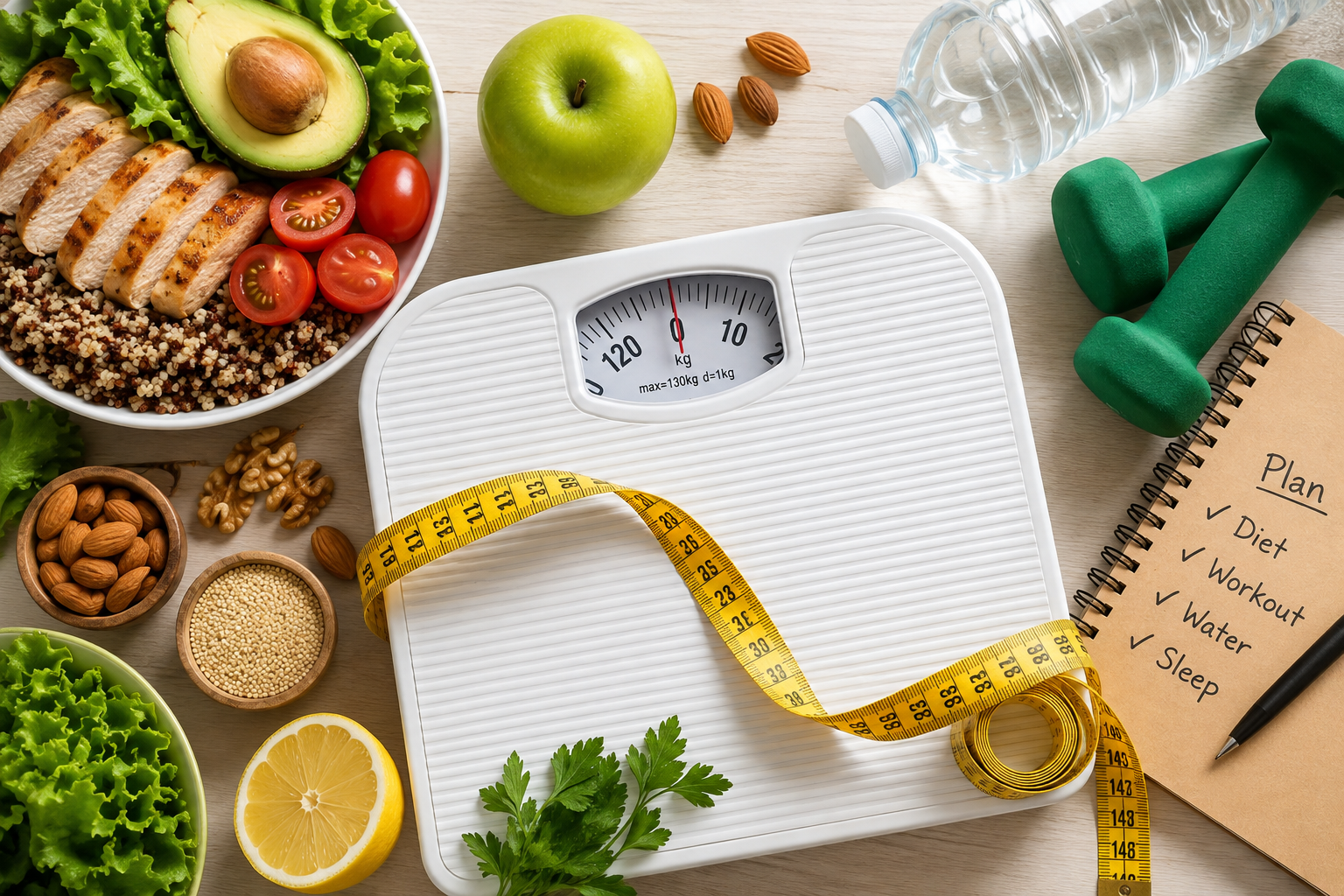
Two months. Twenty pounds. That’s the goal a lot of people type into Google right before a wedding, a beach trip, or just a moment of “I’m done feeling like this.” I get the urgency. But let’s start with the honest version instead of the motivational-poster version: how to lose 20 pounds in 2 months is possible for some people and not realistic for others, and the difference usually comes down to where you’re starting from. Health experts generally cap safe, sustainable loss at 1 to 2 pounds a week. Do the math and that’s more like 8 to 16 pounds over eight weeks for most adults — not 20. If you’ve got more weight to lose, though, the first few weeks tend to move faster because you’re shedding water and glycogen, not just fat. So below is what an honest, doctor-backed eight-week plan actually looks like, plus the mistakes that quietly stall people out around week three.
Is Losing 20 Pounds in 2 Months Realistic?
Short answer: for most people, it’s a stretch. Twenty pounds in eight weeks works out to roughly 2.5 pounds a week, which sits above what health organizations call sustainable. That doesn’t mean nobody hits it. Someone who’s 250-plus pounds, or brand new to eating with any structure, often drops weight faster in the beginning — not because they’re doing anything extreme, but because there’s simply more room to change. And that first-week number on the scale? A chunk of it is water. It looks dramatic. It isn’t all fat.
What the CDC Says About Safe Weight Loss
The Centers for Disease Control and Prevention (CDC) puts safe weight loss at about 1 to 2 pounds a week. Over two months, that’s roughly 8 to 16 pounds. Their reasoning isn’t about being conservative for the sake of it — people who lose weight gradually simply keep it off better than people who lose it fast. Use this range as your benchmark. If a plan promises way more than this, that’s usually your first red flag.
When a Faster Pace Might Be Possible
Think of 20 pounds as a ceiling, not a target you chase no matter what happens to your body along the way. It tends to be safer and more doable if:
- You’ve got 50+ pounds to lose overall — more body weight means more room for a bigger deficit
- You’re starting from a pretty sedentary routine, so there’s a lot of low-hanging fruit
- A doctor or dietitian is keeping an eye on your progress
- You’re not dealing with a health condition that rapid loss could complicate
Note: Got less than 20 to 30 pounds to lose total? Dropping 20 pounds in two months probably isn’t safe or realistic for you specifically. Talk to a doctor before pushing for an aggressive number.
The Calorie Math Behind Weight Loss
Here’s the underlying mechanism, stripped of the marketing: you lose weight by burning more calories than you eat. Period. The CDC estimates a deficit of about 3,500 calories works out to roughly one pound of fat. So to lose 1 to 2 pounds a week, most people need a daily deficit of 500 to 1,000 calories — some from eating less, some from moving more.
Some people try to hit a faster number by pairing a moderate calorie cut with a lot more activity, instead of just crashing their calories down. That’s the smarter version of “faster.” Going too low on calories backfires — muscle loss, fatigue, nutrient gaps, and a plan you can’t actually stick to for eight weeks straight. Keep the deficit real but livable, and let your workouts do some of the heavy lifting.
Step-by-Step Plan to Lose Weight Safely in 2 Months
Step 1: Get a Baseline
Don’t change anything yet. First, write down your current weight, a waist measurement, and what you actually eat for three or four normal days. Most people are surprised by this part — it shows you exactly where the calories are hiding before you start cutting them.
Step 2: Build Balanced Meals
Simple formula: protein, a vegetable, a smaller portion of carbs or fat. That’s most meals, most days. Protein is doing double duty here — it keeps you full and protects your muscle while you’re eating less overall, and that matters more the faster you’re trying to move.
Step 3: Create a Moderate Calorie Deficit
Stick with that 500 to 1,000 calorie daily deficit rather than going extreme. Track your food for the first two or three weeks, even if it feels tedious. It usually is tedious — and it’s also the fastest way to see that the salad dressing, the coffee order, or the weekend drinks are where half your calories were hiding.
Step 4: Strength Train 3 to 4 Times a Week
Lifting weights while you’re losing weight isn’t optional if you want the number on the scale to actually be fat loss. Bodyweight moves, dumbbells, machines — doesn’t matter much which. What matters is showing up. Two full-body sessions a week is a floor; three or four gets you noticeably better results over eight weeks.
Step 5: Walk More, Sit Less
Walking doesn’t get enough credit. It burns real calories without wrecking your appetite or your energy the way harder cardio can. Aim for 8,000 to 10,000 steps a day. Park farther out. Take the stairs. Walk for fifteen minutes after dinner instead of sitting down right away — it adds up faster than you’d think.
Step 6: Sleep, Stress, and Tracking
Skip sleep, and your hunger hormones fight back — that’s not willpower failing, that’s biology. Aim for 7 to 9 hours. And weigh yourself once or twice a week, same time of day, instead of daily. Daily weigh-ins mostly just track sodium and water, and watching that number bounce around can talk you out of a plan that’s actually working fine.
Sample 8-Week Timeline
Here’s what a realistic, staged approach can look like. Early weeks often show a bigger drop from water weight, which is normal and expected.
| Week | Focus | Typical Weight Change |
| 1–2 | Cut processed food, set calorie deficit, start walking daily | 4–7 lbs (includes water weight) |
| 3–4 | Add strength training, dial in protein intake | 2–4 lbs |
| 5–6 | Fine-tune portions, increase step count | 2–4 lbs |
| 7–8 | Maintain habits, address plateaus, reassess goals | 2–4 lbs |
Reality check: Totals across a table like this often land closer to the CDC’s 8-to-16-pound safe range than a full 20 pounds. Treat 20 pounds as a stretch goal, not a guarantee, and let your body’s response guide the pace.
Best Foods for Faster, Healthier Weight Loss
You don’t need a fancy meal plan for this. You need foods that fill you up without costing you a ton of calories:
- Lean proteins — chicken breast, turkey, fish, eggs, tofu, Greek yogurt, cottage cheese
- Fiber-heavy vegetables — broccoli, spinach, peppers, cucumbers, salad greens
- Smarter carbs — oats, brown rice, quinoa, sweet potatoes, beans
- Healthy fats, in moderation — avocado, olive oil, nuts, seeds
- Water over soda, juice, or a sugary coffee order
That last one is the easy win. Cutting sugary drinks alone can strip hundreds of calories a day, and it takes almost no willpower once you get used to it.
Common Mistakes That Slow Down Progress
- Going too low on calories — your metabolism slows down and the whole plan becomes impossible to sustain
- Skipping the weights and losing muscle right alongside the fat
- Weighing in every single day and getting rattled by normal water swings
- Doing cardio only, with no strength training or real diet change behind it
- Cutting out whole food groups instead of just trimming portions
- Not planning for the dinner out, the birthday party, the trip — then treating one off day like the whole thing failed
When to Talk to a Doctor
If you have diabetes, heart disease, you’re pregnant or breastfeeding, on regular medication, or you’ve dealt with disordered eating in the past — talk to a doctor before you start pushing for an aggressive number like this. The National Institute of Diabetes and Digestive and Kidney Diseases (NIDDK) points out that a doctor or dietitian can set a target that actually fits your health history, which matters even more once you’re aiming faster than the standard pace.
Want more workout structure to go with this? Our fitness and weight loss blog on Pak Spectrum has routines and meal ideas you can drop straight into your eight-week schedule.
Final Thoughts
So, can you lose 20 pounds in two months? Maybe. It depends on where you’re starting from, and it’s on the aggressive edge of what most doctors would call safe. What actually works for almost everyone is the boring version: a real but livable calorie deficit, lifting weights so you don’t just shrink, walking more than you think you need to, and sleeping enough that your body isn’t fighting you the whole way. Track your starting point this week. Pick a calorie target you can actually live with for eight weeks straight. Check in every couple of weeks and adjust. A number you can keep off beats a faster one you can’t.
Frequently Asked Questions
Is it safe to lose 20 pounds in 2 months?
For some people, yes — usually those with more weight to lose, since the early weeks drop water weight fast. But it’s faster than the CDC’s 1-to-2-pound-a-week guidance, so if you’ve got a health condition or less weight to lose, check with a doctor first.
How many calories should I cut to lose weight fast?
500 to 1,000 fewer calories a day gets most people to 1 to 2 pounds a week. Cutting way past that tends to backfire — your metabolism slows and the diet stops being something you can actually finish.
Will I lose muscle if I lose weight quickly?
You can, especially if you’re barely eating and skipping the gym entirely. Enough protein plus strength training a few times a week is what keeps that muscle around while the fat comes off.
What exercise burns the most fat in 2 months?
Honestly, it’s the combo, not one magic workout — strength training to hold onto muscle, walking or cardio to widen the calorie gap. Skip either one and you leave results on the table.
Why did my weight loss stall after a few weeks?
That’s usually weeks three through five — water weight settles and your body adjusts to eating less. Recheck your portions, add a little more movement, or recalculate your calories at your new, lower weight.
Is intermittent fasting a good way to lose 20 pounds fast?
It can help, mostly because it naturally leads some people to eat less overall. But it’s not magic — it’s not faster than any other method that hits the same calorie deficit. Use whatever eating pattern you’ll actually stick with for two months.