


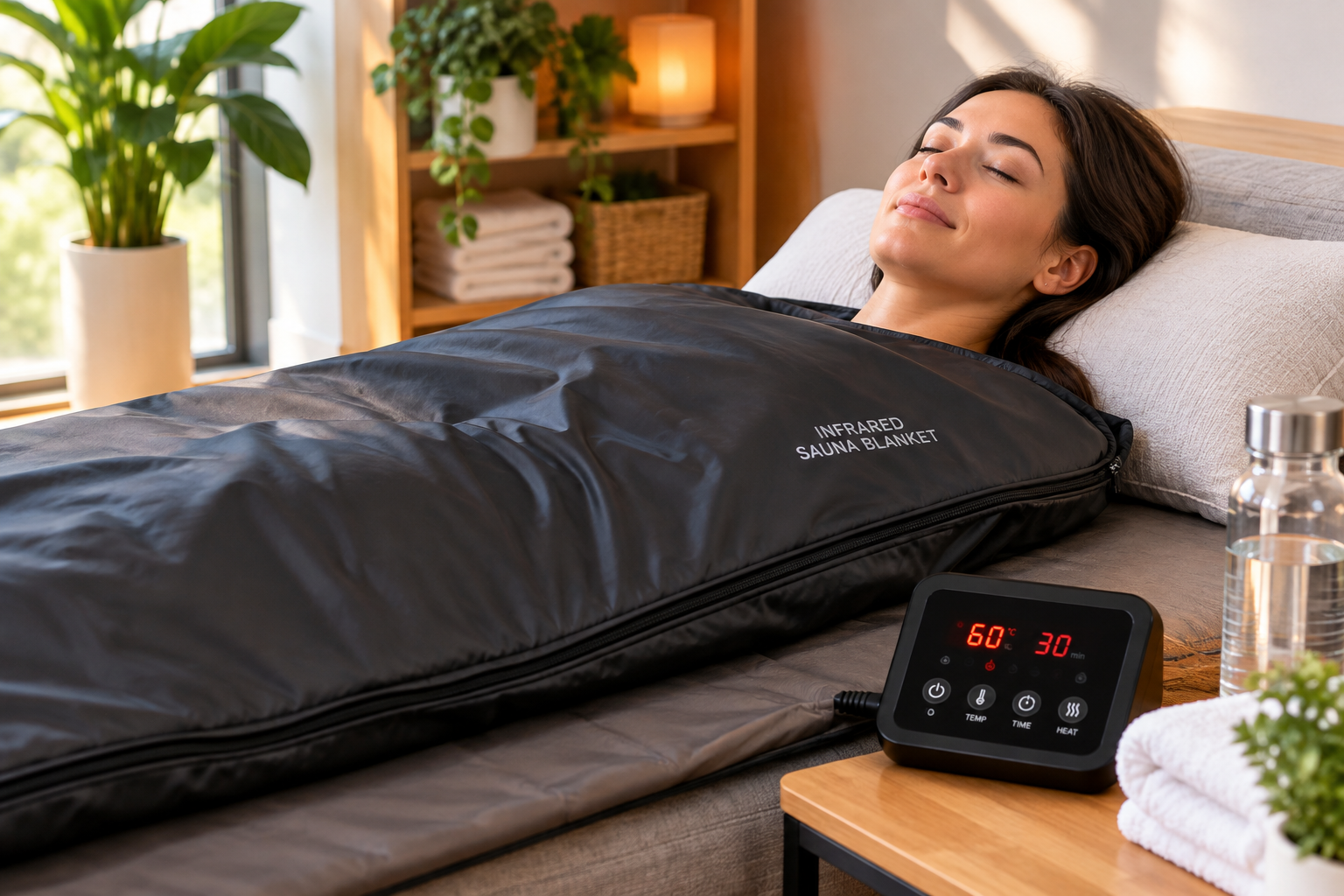
Zip into something that looks like a sleeping bag with a control panel, and twenty minutes later, step out drenched in sweat without ever leaving the living room. That’s the basic pitch behind an infrared sauna blanket, and it’s part of why the product has become such a common sight on wellness shelves and social media feeds over the past few years. It promises a lot of what a traditional sauna offers, minus the dedicated room, the plumbing, and the wait for it to heat up.
This guide covers how an infrared sauna blanket actually works, what it can realistically offer, and how to use one without running into the more common safety issues.
What an Infrared Sauna Blanket Actually Is
An infrared sauna blanket is a wrap or bag lined with infrared heating elements, plugged into a small control unit that lets a user set the temperature and session length. Instead of heating the air around the body the way a traditional sauna does, it uses infrared energy to warm the body more directly, which is why it can reach a sweat inducing effect at a noticeably lower ambient temperature than a standard sauna cabin.
How It Compares to a Traditional Sauna
The two aren’t quite interchangeable, even though they aim for a similar result. Here’s a quick side by side comparison.
| Feature | Infrared Sauna Blanket | Traditional Sauna |
| Setup | Plugs in at home, no installation | Requires a dedicated room or cabin |
| Heat source | Direct infrared heat on the body | Heated air surrounding the whole body |
| Typical temperature | Around 95 to 176 degrees Fahrenheit | Often 150 to 195 degrees Fahrenheit |
| Session length | 20 to 45 minutes | 10 to 20 minutes, sometimes longer |
| Cost | One time purchase, generally lower | Higher upfront cost or ongoing gym or spa fees |
What the Research Actually Says
It’s worth being upfront here: dedicated research specifically on sauna blankets is still fairly limited. Most of what’s known comes from broader research on infrared saunas and heat therapy in general. According to an overview from Medical News Today, infrared sauna blankets work by exposing the body to heat in a way similar to a sauna, and some research points to potential benefits for musculoskeletal conditions, though the evidence specific to blankets, rather than full sauna cabins, remains limited. Broader sauna research has also looked at cardiovascular and relaxation benefits, but those studies weren’t conducted on sauna blankets directly, so it’s reasonable to treat the crossover with some caution.
Separately, some early stage clinical research has explored whether infrared heat devices can be used to safely raise core body temperature for therapeutic purposes, an area that remains under investigation rather than settled science.
Potential Benefits People Report
Even with limited blanket specific research, many users and companies point to a similar list of reported benefits, generally tied to the broader effects of heat exposure and sweating.
- A feeling of relaxation and stress relief after a session.
- Temporary relief from minor muscle soreness or tension.
- A noticeable sweat response, which some people use as part of a broader wellness routine.
- Convenience compared to visiting a spa or gym with sauna access.
Worth noting: claims around weight loss and detoxification are common in marketing for these products, but the actual evidence behind those specific claims is weak. Any weight lost during a session is almost entirely water weight from sweating, and it returns once normal hydration resumes.
How to Use One Safely
Because the body heats up quickly inside one of these blankets, a few precautions go a long way toward keeping a session comfortable rather than risky.
- Start with a lower temperature and shorter session, especially for a first time user, then adjust gradually once it’s clear how the body responds.
- Keep sessions in the range most manufacturers recommend, generally 20 to 45 minutes, and avoid falling asleep inside the blanket.
- Drink water before and after a session, since sweating at this level can lead to dehydration if fluids aren’t replaced.
- Use a thin layer of clothing or a fabric barrier between skin and the blanket for hygiene and comfort.
- Stop the session early if feeling dizzy, overly hot, or unwell, rather than pushing through to a set time.
Who Should Be Cautious or Avoid Sauna Blankets
Heat therapy isn’t right for everyone, and a sauna blanket is no exception. It’s worth checking with a doctor before using one for anyone who is pregnant, has a heart condition, has low or unstable blood pressure, or is currently unwell with a fever. Children should generally not use these products given the intensity of heat exposure involved. When in doubt, a conversation with a healthcare provider beats guessing, especially for anyone managing an existing health condition.
What to Look for When Choosing One
- Adjustable temperature and timer controls, ideally with an automatic shutoff feature.
- A temperature range wide enough to start low and build up gradually over time.
- Recognized safety certifications on the electrical components.
- An interior lining that’s easy to wipe down or that accepts a washable liner, given how much sweating is involved.
- Manufacturer instructions that clearly state maximum safe session length and temperature.
How Often People Typically Use One
Most manufacturer guidance suggests using an infrared sauna blanket somewhere between two and four times a week, with sessions in the 20 to 45 minute range. That said, individual tolerance to heat varies quite a bit, and starting on the lower end of both frequency and duration is a reasonable way to see how the body responds before settling into a regular routine.
Final Thoughts
An infrared sauna blanket offers a convenient, lower cost way to bring some of the sensation and reported relaxation benefits of a sauna into a home setting, without needing a dedicated room or ongoing spa membership. The science on sauna blankets specifically is still catching up to the marketing around them, so it’s worth treating bold claims with a healthy dose of skepticism while still recognizing the more modest, well supported benefits like relaxation and a temporary sense of relief after a session.
This article is for general information only and isn’t a substitute for medical advice. Anyone with a heart condition, blood pressure issues, or another health concern should check with a doctor before starting regular use.
Frequently Asked Questions
Is an infrared sauna blanket the same as a traditional sauna?
Not exactly. Both use heat to induce sweating, but a sauna blanket delivers infrared heat more directly to the body, while a traditional sauna heats the surrounding air in a dedicated room or cabin.
How long should a session last?
Most manufacturers recommend sessions between 20 and 45 minutes, with beginners starting on the shorter end and building up gradually as tolerance to the heat increases.
Can an infrared sauna blanket help with weight loss?
Any weight lost during a session is primarily water weight from sweating and typically returns once normal hydration is restored. There isn’t strong evidence supporting long term fat loss from sauna blanket use alone.
Who should avoid using a sauna blanket?
People who are pregnant, have heart conditions, have unstable blood pressure, or are currently feeling unwell should check with a doctor before use. Children generally should not use these products.
How often can someone safely use an infrared sauna blanket?
Most guidance suggests two to four sessions per week, though individual tolerance varies, and starting with fewer, shorter sessions is a reasonable way to gauge personal response.
Do infrared sauna blankets have any proven health benefits?
Evidence specific to sauna blankets is still limited, though broader research on infrared heat and sauna bathing points to possible benefits like relaxation and temporary relief from minor muscle tension.