


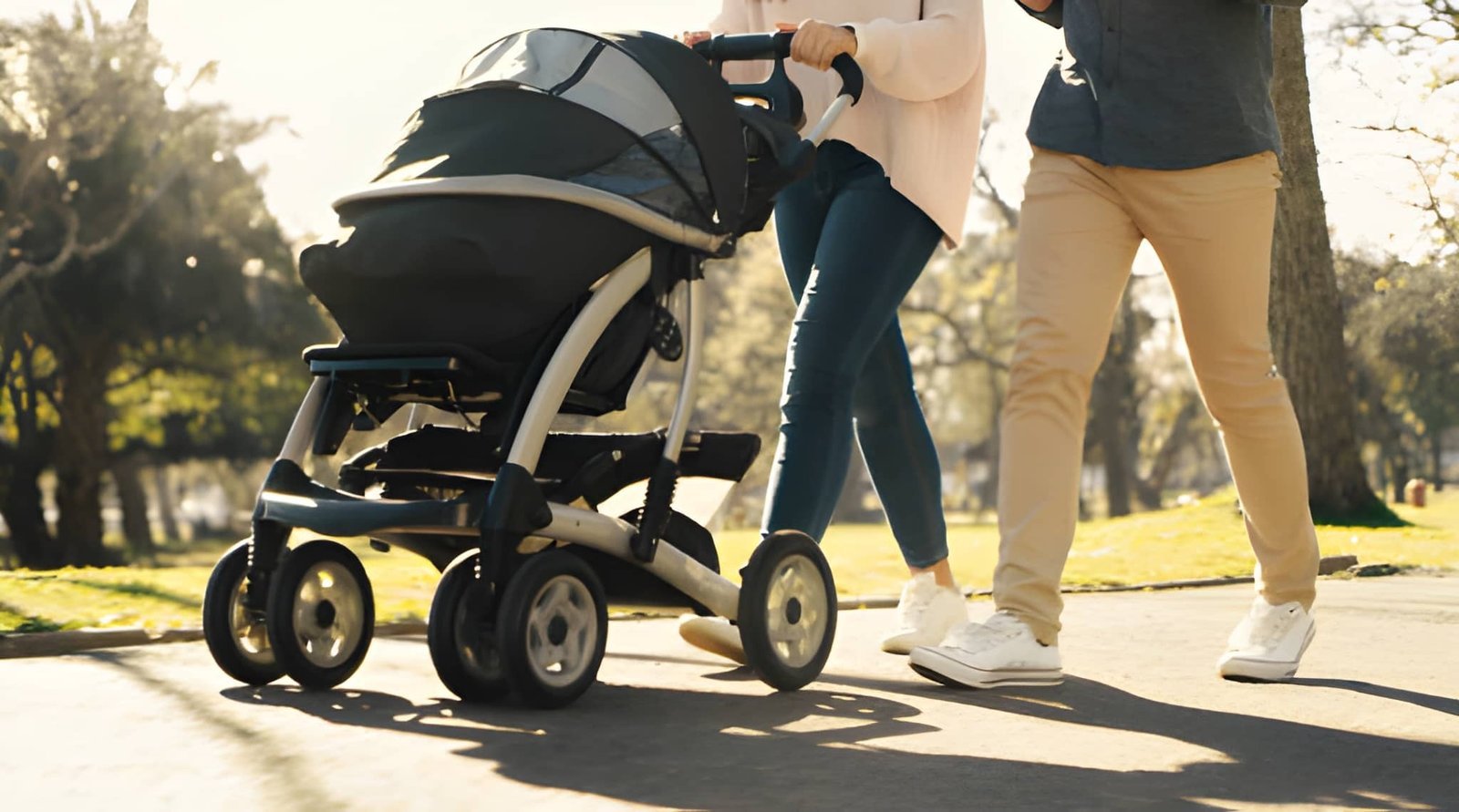
Standing in a baby gear aisle with a dozen stroller models in front of you is enough to make any new parent’s head spin. Wheels, seats, canopies, price tags that range from about $100 to over $1,000 – where do you even start? Learning how to choose a baby stroller does not have to be complicated once you know which features actually matter for your daily life. In the United States, every stroller sold must meet the federal safety rule at 16 CFR Part 1227, which incorporates the ASTM F833 testing standard for brakes, folding locks, and stability. That baseline safety is already built in, so your real job is picking the stroller that fits your lifestyle, your car, your budget, and your child’s age. This guide walks through exactly what to check, step by step, so you can shop with confidence instead of guesswork.
Why Choosing the Right Stroller Matters
A stroller is one of the biggest gear purchases you will make before your baby arrives, and you will likely use it almost every day for the next three to four years. The right stroller makes school runs, grocery trips, and neighborhood walks easy. The wrong one gets stuck in doorways, struggles on curbs, or ends up folded in the garage after a few weeks. Getting this decision right early saves both money and frustration later.
Types of Baby Strollers Explained
Before comparing features, it helps to know the main categories on the market. Most parents end up choosing between these six types.
Full-Size Strollers
These are the sturdy, traditional strollers most people picture first. They usually have a roomy seat, a large storage basket, a smooth ride on bigger wheels, and a seat that reclines flat enough for newborns and stays useful through toddlerhood. They fold larger than other types, so trunk space is worth checking before you buy.
Lightweight or Umbrella Strollers
Built for portability, these often weigh under 15 pounds and fold down small enough to carry onto a plane or tuck into a small car trunk. They trade off storage space and a plush ride for convenience, and most are made for toddlers who can already sit up rather than newborns.
Travel System Strollers
A travel system pairs a stroller frame with an infant car seat that clicks in and out. It is a popular first stroller because a sleeping newborn can move from the car to the stroller without waking up.
Jogging Strollers
These have three wheels and a front wheel that locks straight for stability at running speed, plus a hand brake and wrist strap. They are built for paved trails and open sidewalks, not for tight store aisles, since the fixed front wheel does not turn easily.
Double and Tandem Strollers
Families with two young children usually choose between side-by-side doubles, which are wider but may not fit through a standard doorway, and tandem (front-and-back) doubles, which are narrower but longer.
Convertible or Modular Strollers
These systems let you attach different seats, a bassinet, or a car seat adapter onto one frame, so a single stroller can grow with your family from the newborn stage through preschool.
Stroller Safety Standards You Should Know About
What the Federal Rule Actually Covers
The U.S. Consumer Product Safety Commission requires every carriage and stroller sold in the country to meet 16 CFR Part 1227, which points to the ASTM F833 voluntary standard for its specific test methods. That standard was created after the CPSC identified real injury patterns tied to stability problems, weak brakes, restraint failures, folding hinges that pinch fingers, structural cracks, wheels that detach, and gaps that trap a child’s head or limbs. Since 2014, any stroller legally sold in the US has been tested against these hazards before it reaches shelves.
Recall Checks and Registration Cards
Meeting the standard at the factory is not the end of the story. Register every stroller you buy with the manufacturer so you are notified if a recall happens later, and check CPSC.gov before buying a secondhand model, since older strollers may predate current rules or have an open recall. A legitimate stroller carries a permanent tracking label with the manufacturer name, model, and date of manufacture, which you will need if you ever have to look up a recall.
| Quick tip: Before buying secondhand, search the stroller’s brand and model name plus the word “recall” on CPSC.gov. It takes two minutes and can save you a serious safety headache. |
Key Features to Compare Before You Buy
Once you know which stroller type fits your life, compare these features across the models on your shortlist.
Wheels and Suspension
Larger wheels with some suspension roll more smoothly over cracked sidewalks, gravel, and grass. Smaller wheels are lighter and turn tighter, which works better indoors and in tight urban spaces.
Brakes
Look for a brake that locks both rear wheels at once with a single foot press. Test it in the store; it should engage firmly and hold the stroller still on a slight incline.
Harness and Recline
A five-point harness is the safest choice for infants and young toddlers because it secures the shoulders, hips, and lap. Check that the seat reclines far enough for safe newborn use if you plan to use the stroller from birth.
Canopy and Weather Protection
A canopy that extends low and wide blocks more sun and wind. If you live somewhere with real winters or a rainy season, look for a rain shield and a canopy with a peek-a-boo window so you can check on your baby without stopping.
Storage Basket
A basket that is easy to reach from the back, holds a diaper bag comfortably, and does not shrink when the seat reclines will matter every single outing.
Fold Size and Weight
Check the folded dimensions against your trunk space, and try folding and unfolding it yourself in the store, ideally one-handed while holding something in your other arm, since that is exactly what you will be doing at home.
How to Match a Stroller to Your Lifestyle
City and Apartment Living
If you climb stairs, use public transit, or navigate narrow store aisles often, prioritize light weight, a compact fold, and tight turning over storage size.
Suburban and Car-Heavy Living
If most trips start and end at a car, a full-size or travel system stroller with a large basket and a smooth ride usually works better than a compact one, since trunk space is less of a constraint.
Active and Outdoor Parents
Runners and hikers should look specifically at jogging strollers with air-filled tires and a locking front wheel, and should always use the wrist strap.
Parents of Multiple Young Children
Measure your doorways and car trunk before choosing between a side-by-side or tandem double, and check the weight limit for both seats combined.
Stroller Comparison Table by Type
| Stroller Type | Best For | Typical Weight | Newborn Ready? |
|---|---|---|---|
| Full-size | Everyday use, smooth rides | 20-30 lbs | Yes, with recline or bassinet |
| Lightweight/umbrella | Travel, quick errands | 10-15 lbs | Usually no |
| Travel system | New parents, car trips | 20-25 lbs (frame) | Yes, with car seat |
| Jogging | Running, trails | 25-30 lbs | Only 3-wheel versions with recline |
| Double/tandem | Two young kids | 30-40 lbs | Depends on seat configuration |
| Convertible/modular | Growing families | 20-30 lbs | Yes, with bassinet attachment |
Budget Guide: What You Get at Each Price Point
- Under $150: Basic lightweight or umbrella strollers with fewer recline positions and a smaller basket, fine as a second or travel stroller.
- $150 to $400: Solid full-size strollers and many travel systems with better suspension, a bigger canopy, and a one-hand fold.
- $400 to $700: Premium suspension, all-wheel-drive style wheels, larger canopies, and easier car seat compatibility across brands.
- $700 and up: Designer materials, extensive accessory ecosystems, and modular systems built to last through multiple children.
Spending more does not automatically mean safer, since every stroller sold in the US must meet the same federal rule regardless of price. Extra cost usually buys convenience, materials, and accessories rather than a higher safety bar.
Age and Weight Guidelines
Most stroller seats are rated for use from birth (when reclined flat or paired with a bassinet or infant car seat) up to about 50 pounds, though this varies by model. Always check the manufacturer’s specific weight and height limits printed on the stroller itself or in the manual, since they can differ even within the same brand’s lineup.
Common Mistakes to Avoid When Choosing a Stroller
- Buying based on looks alone without testing the fold and the brake in person.
- Skipping the trunk-space check and finding out later it barely fits.
- Choosing a jogging stroller as an everyday errand stroller, then struggling with tight turns.
- Ignoring the weight limit and using a stroller past its safe capacity.
- Never registering the product, which means missing recall notices.
- Overlooking one-handed folding, which matters more than most parents expect once the baby is on your hip.
When to Replace or Upgrade Your Stroller
Replace a stroller if the frame is cracked, the brakes no longer hold on an incline, the fabric harness is frayed, or it has an unresolved recall. Consider upgrading, rather than replacing, when your child outgrows the current weight or height limit, or when your daily routine changes significantly, such as moving from an apartment to a house with a bigger car.
Conclusion
Choosing a stroller comes down to matching the type, features, and price to how you actually live, not to which model has the most buzz online. Start with your daily routine, check the safety basics like the brake and harness, confirm it meets your car and doorway measurements, and test the fold yourself before you buy. Once you have your shortlist, visit a store if you can, push the stroller around, fold it one-handed, and picture using it on your actual daily route. If you’re building out the rest of your baby gear checklist, Pak Spectrum’s Lifestyle section covers more practical family and parenting guidance, and the Health & Fitness section has tips on staying active with a new baby in tow.
Frequently Asked Questions
What is the safest type of stroller for a newborn?
A travel system with an infant car seat or a full-size stroller with a flat recline or bassinet attachment is generally safest for newborns, since young babies need full head and neck support that upright seats do not provide.
Do all strollers sold in the US have to meet the same safety standard?
Yes. Every carriage and stroller sold in the US must comply with 16 CFR Part 1227, which incorporates the ASTM F833 testing standard, regardless of brand or price.
How much should I spend on a baby stroller?
Most families find a solid everyday stroller in the $150 to $400 range. Higher prices generally buy convenience and materials rather than additional safety, since all strollers must meet the same federal rule.
Can I use one stroller for two children?
Yes, with a double or tandem stroller, though you should check the combined weight limit and measure your doorways and car trunk before buying, since double strollers are significantly wider or longer than single strollers.
Is a jogging stroller good for everyday use?
It can be, but the fixed or lockable front wheel that keeps it stable while running also makes it harder to steer through tight aisles and sharp turns, so many parents keep a separate lightweight stroller for errands.
How do I know if a used stroller is still safe?
Check the model and brand against CPSC.gov’s recall list, inspect the frame and harness for cracks or fraying, and test the brake and fold before using it with your child.
What weight limit should I look for?
Weight limits vary by model, typically from 35 to 50 pounds or more, so check the specific stroller’s manual rather than assuming a standard number across brands.
When should I stop using a stroller?
Most children transition out of strollers between ages 3 and 4, though this depends on the child’s size, stamina for walking, and the manufacturer’s stated weight and height limit for that model.