


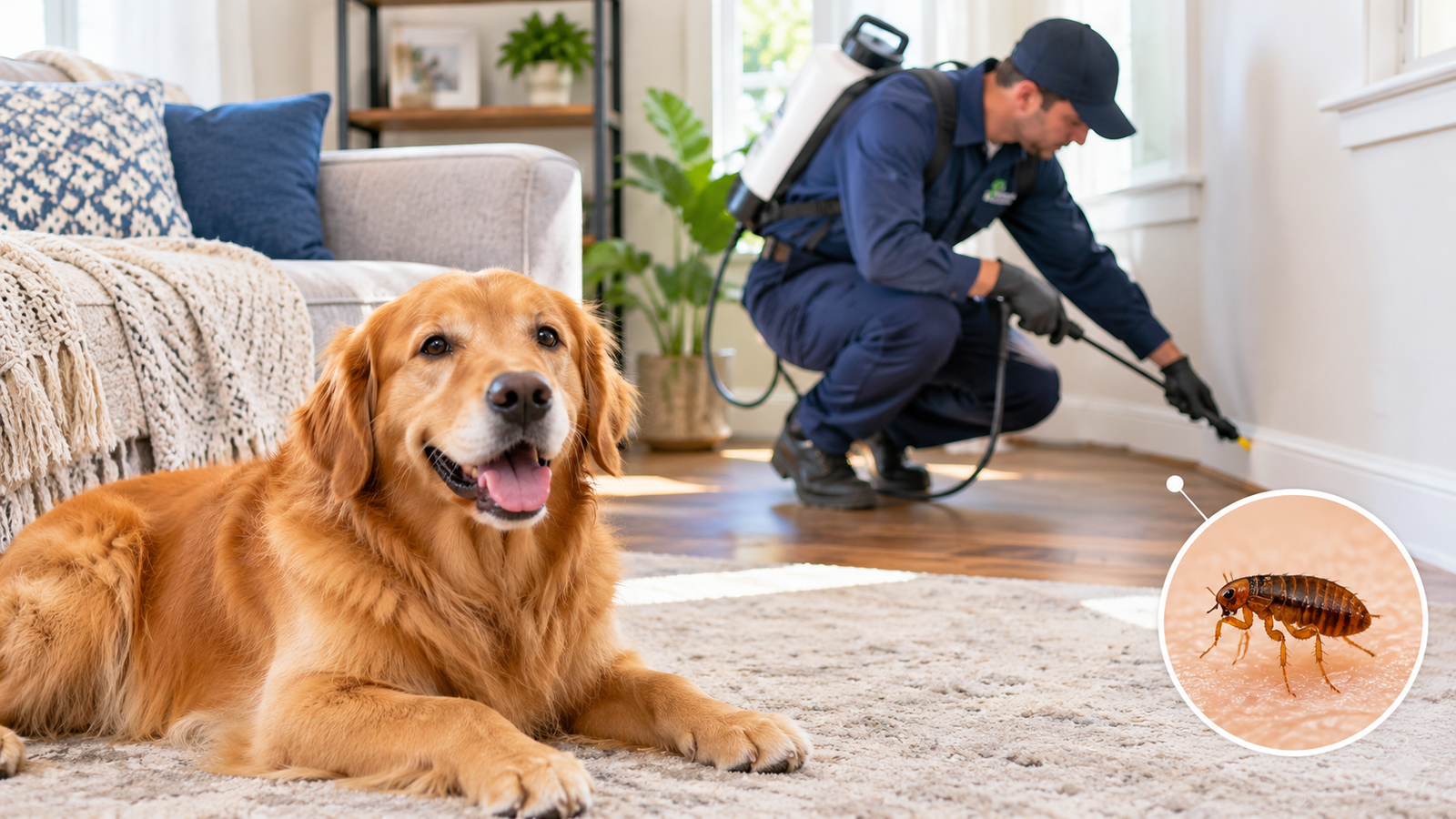
One flea bite rarely stays one flea bite. By the time anyone notices the itching, there’s usually already a full life cycle playing out somewhere in the carpet, the couch cushions, or the yard. That’s the frustrating part about fleas. The adults biting a person or a pet are only a small fraction of the actual population at any given moment, which is exactly why a can of spray from the hardware store so often fails to finish the job.
This guide covers what a professional flea treatment actually involves, how it differs from DIY options, and what to expect from cost, prep, and follow up.
Why Fleas Are Harder to Get Rid Of Than They Seem
A flea infestation isn’t really one problem, it’s four happening at once: eggs, larvae, pupae, and adults, all at different stages and often in different parts of the home. Adult fleas make up only a small percentage of the total population at any given time, while eggs and larvae hide deep in carpet fibers, floor cracks, and pet bedding. A product that only kills adult fleas on contact leaves the rest of the life cycle completely intact, which is why infestations tend to bounce back within a couple of weeks of a single DIY treatment.
What a Professional Flea Treatment Involves
A licensed pest control technician typically treats a flea infestation using a combination approach rather than a single spray.
Inspection and Identification
A professional starts by confirming it’s actually fleas, not another biting insect, and identifying where the infestation is concentrated, since fleas tend to cluster around pet resting spots, along baseboards, and in areas with heavy foot traffic.
Treating Multiple Life Stages at Once
Rather than only targeting visible adult fleas, professional treatments typically combine an adulticide with an insect growth regulator, a product that interrupts the development of eggs and larvae so they never mature into biting adults. Treating both stages at once is a big part of why professional treatment tends to hold up better over time than a single store bought spray.
Indoor and Outdoor Treatment
Since fleas move easily between a yard and a home, especially with pets going in and out, a thorough professional treatment usually covers both indoor areas, like carpets, baseboards, and pet bedding, and outdoor areas where pets spend time, such as shaded, humid spots under decks or shrubs where flea larvae tend to survive best.
A Follow Up Visit
Because flea eggs and pupae can take a couple of weeks to fully hatch and respond to treatment, most professional services include a scheduled recheck visit, generally within two to three weeks of the initial treatment, to catch any fleas that emerged after the first visit.
Professional Treatment vs. DIY Products
Store bought sprays, foggers, and powders aren’t useless, but they tend to fall short for anything beyond a very minor, early stage flea problem. Here’s how the two approaches generally compare.
| Approach | Store Bought Products | Professional Pest Control |
| Treats the full life cycle | Often only kills adult fleas | Targets eggs, larvae, and adults together |
| Coverage | Limited to treated areas | Whole home, including cracks and hidden spots |
| Follow up | Left entirely to the homeowner | Usually includes a scheduled recheck visit |
| Product strength and safety | Variable, depends on the product chosen | Applied by a licensed, trained technician |
| Cost | Lower upfront, may need repeat purchases | Higher upfront, often more effective long term |
What Prep Looks Like Before a Professional Visit
Most pest control companies ask homeowners to do a bit of prep work before the technician arrives, since it directly affects how well the treatment performs.
- Vacuum all carpets, rugs, and upholstered furniture thoroughly, then dispose of the vacuum bag or empty the canister outside.
- Wash pet bedding, blankets, and any washable fabric the pet regularly contacts, using hot water when possible.
- Clear floors of toys, shoes, and clutter so the technician can treat baseboards and hard to reach corners.
- Treat pets separately with a vet recommended flea product, since most home pest control treatments don’t apply directly to animals.
- Plan to keep pets and family members out of treated areas for the period specified by the technician, typically a few hours.
Choosing a Pest Control Company
Not every pest control company approaches flea treatment the same way, and it’s worth vetting a company before hiring one. The EPA’s guidance on hiring a pest control professional recommends confirming that any company is properly licensed in the state, and suggests looking for a provider with experience in Integrated Pest Management, an approach that combines prevention and targeted treatment to reduce overall pesticide use rather than relying on repeated blanket spraying.
- Confirm the company is licensed and ask for proof if it isn’t clearly stated.
- Ask what products will be used and request the product label or safety data sheet if curious.
- Ask directly whether the treatment plan includes both an adulticide and a growth regulator, since that combination matters for long term results.
- Confirm whether a follow up visit is included in the price or billed separately.
- Read recent reviews specifically mentioning flea treatment, since general pest control reviews don’t always reflect flea specific results.
How Much Professional Flea Treatment Typically Costs
Pricing varies by region, home size, and the severity of the infestation, but professional flea treatment is generally priced higher than a single store bought product, often reflecting both the initial visit and a built in follow up treatment. Getting a couple of quotes and asking exactly what’s included, indoor treatment, outdoor treatment, and follow up visits, makes it easier to compare providers accurately rather than judging purely on the quoted price.
Preventing Fleas From Coming Back
- Keep pets on a consistent, vet recommended flea prevention product year round, not just during warmer months.
- Vacuum regularly, especially in areas where pets spend the most time.
- Wash pet bedding on a regular schedule, not just when a problem is already suspected.
- Keep grass trimmed and reduce shaded, humid areas in the yard where flea larvae thrive.
- Address any wildlife activity near the home, since stray animals and wildlife are common sources of reintroduced fleas.
Final Thoughts
A serious flea infestation is one of those problems that tends to outlast good intentions and a single trip to the store. Professional treatment costs more upfront than a can of spray, but the combination of targeting multiple life stages, treating both indoor and outdoor areas, and following up a couple of weeks later is usually what actually breaks the cycle for good. For anything beyond a very minor, early stage issue, it’s typically the more reliable path back to a flea free home.
Frequently Asked Questions
How long does professional flea treatment take to work?
Adult fleas are typically affected within the first day or two, but full resolution usually takes a couple of weeks, since eggs and pupae continue hatching during that window and a follow up treatment often addresses them.
Is professional flea treatment safe for pets and children?
Licensed technicians follow product label instructions and typically ask that pets and family members stay out of treated areas for a specified period. Confirming safety details directly with the company before treatment is a reasonable step.
How many visits does professional flea treatment usually require?
Most services include an initial treatment plus one follow up visit within two to three weeks, though severe infestations may require additional visits.
Can fleas come back after professional treatment?
Yes, especially if pets aren’t kept on a regular flea prevention product or if wildlife or stray animals continue bringing fleas into the yard. Ongoing prevention matters as much as the initial treatment.
Do I need to leave my home during flea treatment?
It depends on the products used. Some treatments require a few hours away from treated areas, while others only require avoiding direct contact with wet treated surfaces. The technician should specify this before starting.
Is DIY flea treatment ever enough?
For a very minor, early stage issue, thorough vacuuming, washing pet bedding, and a vet approved pet treatment might resolve things. For anything more established, professional treatment that addresses all life stages tends to be more reliable.