


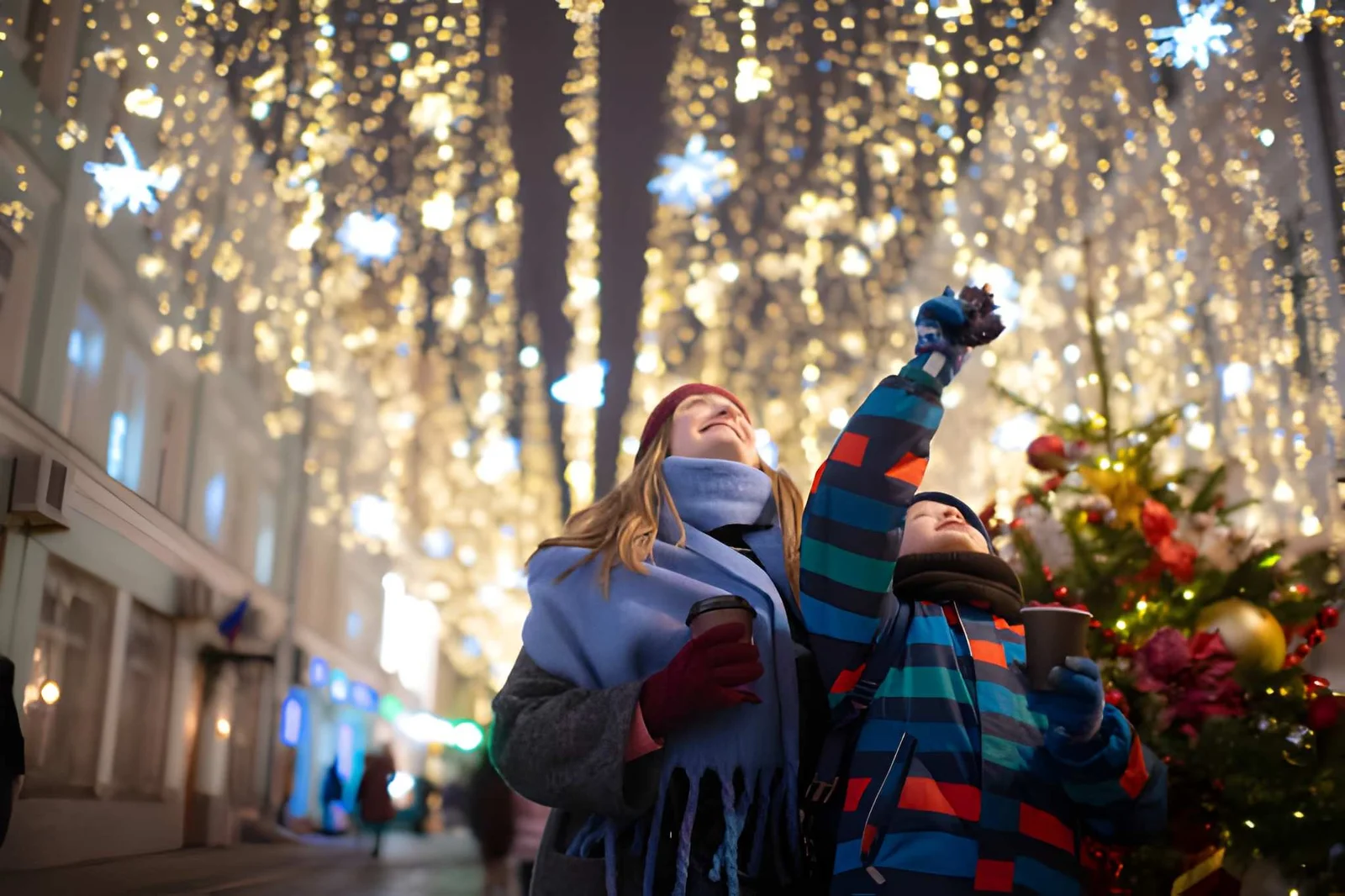
Every culture on Earth stops, at chosen moments, to feast, sing, dress up and remember together. Celebrations are how people mark the turning of seasons, honour their gods and ancestors, welcome new beginnings and simply remind each other that life is worth savouring.
The details change from place to place: lamps in India, water fights in Thailand, sugar skulls in Mexico, grapes at midnight in Spain. Yet underneath the costumes and the cuisine, the same human needs keep showing up. In this post we travel the globe through five kinds of celebration: festivals of light, new year traditions, harvest feasts, spring and carnival, and festivals of faith and family.
Festivals of Light
When nights grow long, people light fires, lamps and lanterns, and nearly every continent has a festival to prove it.
- Diwali (India and the diaspora). Millions of clay lamps called diyas glow on rooftops and windowsills, homes are decorated with rangoli patterns, and families share sweets and fireworks. For Hindus, Jains and Sikhs, among others, it celebrates the triumph of light over darkness, though the stories behind it vary by region.
- Hanukkah (Jewish communities worldwide). Over eight nights, one more candle is added to the menorah. The festival recalls the rededication of the Temple in Jerusalem, and foods fried in oil, such as latkes and sufganiyot, are part of the tradition.
- Loy Krathong and Yi Peng (Thailand). On the full moon of the twelfth lunar month, people float small lotus-shaped baskets of flowers and candles on rivers, letting go of grudges and bad luck. In Chiang Mai, thousands of paper lanterns drift into the night sky at the same time.
- Lantern Festival (China). It closes the Lunar New Year season on the fifteenth day with glowing lanterns, riddles and sweet rice dumplings called tangyuan.
Different faiths, different stories, one shared instinct: when the dark is deepest, gather and make light.
New Year Traditions
The calendar flips in different places on different dates, but the hopes people carry into a new year are remarkably alike: health, luck, prosperity and a clean slate.
- Lunar New Year (China, Vietnam, Korea and beyond). Families clean their homes to sweep out bad luck, gather for a reunion dinner, and give red envelopes of money to children. Lion and dragon dances fill the streets. It is called Tet in Vietnam and Seollal in Korea.
- Hogmanay (Scotland). The night ends with fireworks, street parties and “first-footing”: the first visitor after midnight, traditionally bringing gifts such as coal or whisky, is said to bring luck for the year.
- Spain and Latin America. Spaniards eat twelve grapes, one for each stroke of the midnight bell. In parts of Latin America, the colour of your underwear is chosen to attract love (red) or money (yellow).
- Japan. Temple bells ring 108 times on New Year’s Eve, once for each earthly desire in Buddhist tradition, to cleanse the old year.
- Nowruz (Iran, Central Asia and elsewhere). The Persian new year falls on the spring equinox. Families set a table called the Haft-sin with seven symbolic items beginning with the letter S, and spring-clean the house.
New year customs show how people use symbols, from bells to grapes to coins, to feel a small measure of control over what lies ahead.
Harvest and Thanksgiving
Before supermarkets, a good harvest meant survival, so gratitude for the season’s bounty became one of the oldest reasons to celebrate.
- Thanksgiving (United States and Canada). Families gather around a table of turkey, stuffing and pie. In the US it falls on the fourth Thursday of November, which this year is November 26; Canada marks it on the second Monday of October.
- Chuseok (Korea). Held at the full moon of the eighth lunar month, it brings families together to honour ancestors, share half-moon rice cakes called songpyeon and visit hometowns.
- Mid-Autumn Festival (China and Vietnam). People admire the full moon, share mooncakes and, in Vietnam, children parade with colourful lanterns.
- Pongal (Tamil Nadu, India). In January, rice and milk are boiled until they overflow the pot, a symbol of abundance, and offered to the sun.
- Onam (Kerala, India). Homes are decorated with flower carpets and a vegetarian feast called sadya is served on banana leaves.
- Yam festivals (West Africa). Communities such as the Igbo in Nigeria and the Ga in Ghana mark the harvest with feasting, dance and thanks to the ancestors.
The lesson is universal: gratitude tastes better when it is shared.
Spring, Colour and Carnival
When winter loosens its grip, the world gets loud, wet and colourful.
- Holi (India and Nepal). The festival of colours arrives in late winter or early spring. After a bonfire the night before, people throw coloured powder and water at friends and strangers alike, and old quarrels are forgiven.
- Songkran (Thailand). The Thai new year in mid-April began as a gentle ritual of pouring water over Buddha images and the hands of elders. Today it is also a nationwide water fight that cools down the hottest month of the year.
- Carnival (Brazil, Italy, Trinidad and beyond). The days before Lent are for samba parades in Rio de Janeiro, masks in Venice and steelpan and soca in Trinidad. Mardi Gras in New Orleans belongs to the same family.
- Hanami (Japan). In spring, friends and colleagues picnic beneath cherry blossoms, celebrating how beautiful and brief life can be.
These festivals invite everyone to play, and for a day or two the usual social rules relax.
Faith, Family and Remembrance
Some of the most meaningful celebrations are spiritual, and they are almost always about people coming home.
- Eid al-Fitr and Eid al-Adha (Muslim world). Eid al-Fitr ends the month of Ramadan with special prayers, new clothes, gifts to the poor and sweet dishes. In South Asia, the night before is full of henna and bustling bazaars. Eid al-Adha commemorates Prophet Ibrahim’s devotion, and the meat of the sacrificial animal is shared with family, neighbours and those in need.
- Christmas (Christian communities worldwide). The season looks different everywhere: Germany has its Christmas markets, the Philippines begins celebrating in September, and Ethiopian Orthodox Christians observe Genna on January 7.
- Vesak (Buddhist communities). On the full moon in May, Buddhists mark the birth, enlightenment and passing of the Buddha with lanterns, temple visits, offerings and acts of charity.
- Dia de Muertos (Mexico). On November 1 and 2, families build altars called ofrendas with marigolds, photographs, favourite foods and pan de muerto to welcome the spirits of loved ones home. UNESCO recognises it as intangible cultural heritage.
- Obon (Japan). In summer, lanterns guide ancestral spirits home and communities dance the Bon Odori in their honour.
Faith-based celebrations remind us that remembering the people who came before us can be an act of joy.
Celebrations at a Glance
Timing for many of these festivals follows lunar or religious calendars, so exact dates shift each year.
| Celebration | Where | Usual time of year | Signature tradition |
| Lunar New Year | China, Vietnam, Korea | Late January to February | Reunion dinner, red envelopes |
| Nowruz | Iran, Central Asia | Around March 20-21 | Haft-sin table |
| Holi | India, Nepal | February to March | Coloured powder |
| Songkran | Thailand | Mid-April | Water splashing |
| Vesak | South and Southeast Asia | May full moon | Lanterns, temple offerings |
| Eid al-Fitr | Muslim world | After Ramadan ends | Prayers, new clothes, sweets |
| Carnival | Brazil, Italy, Trinidad | Before Lent | Parades, masks, music |
| Chuseok | Korea | September to October | Songpyeon, ancestral rites |
| Diwali | India and diaspora | October to November | Diyas, rangoli, fireworks |
| Dia de Muertos | Mexico | November 1-2 | Ofrendas, marigolds |
| Thanksgiving | United States | Fourth Thursday of November | Family feast |
| Hogmanay | Scotland | December 31 | First-footing, fireworks |
What Every Celebration Shares
Look closely and the same threads run through every festival on this list. There is food, shared at a crowded table. There is gathering, whether in a family home or a city street. There is remembrance of ancestors, gods or seasons past, and there is renewal, the belief that tomorrow can be better.
Celebrations also build belonging. A child who learns to light a diya, fold a dumpling or stand on a chair for the twelve grapes is being handed an identity, one joyful ritual at a time. And in a world that often feels divided, learning how others celebrate is one of the simplest ways to feel what we have in common.


