


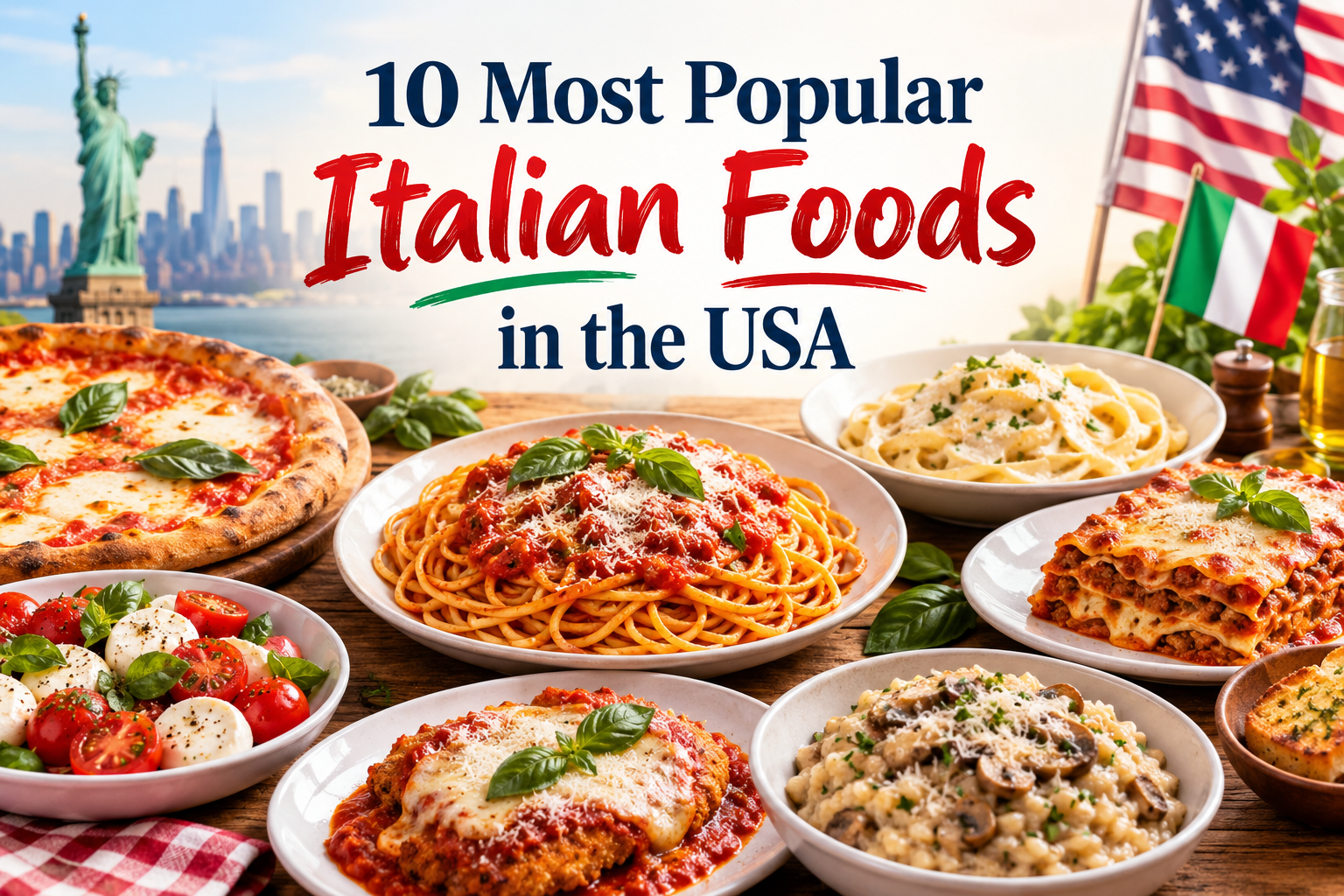
Ask an American what their favorite comfort food is, and there’s a solid chance the answer traces back to Italy somehow. Pizza night, Sunday spaghetti, a slice of tiramisu after dinner. It’s woven into the culture at this point, not treated as some exotic import anymore.
That’s not just a feeling either. The National Restaurant Association has noted Italian food is served at more than 100,000 restaurants across the country, and that’s before counting the pizzerias on every other corner or the frozen pasta aisle at any grocery store. This list runs through the ten Italian dishes Americans keep coming back to, and a bit on why each one stuck.
Why Italian Food Took Over American Kitchens
A lot of it traces back to Italian immigration in the late 1800s and early 1900s. Recipes came over, then got adapted to whatever ingredients were actually available, and to American tastes that leaned heavier on cheese, meat, and bigger portions than a lot of traditional Italian cooking calls for. That’s why dishes like chicken parmesan or spaghetti and meatballs barely exist in Italy the way Americans know them. They’re Italian American inventions, born out of necessity and creativity, not direct imports.
The 10 Most Popular Italian Foods in the USA
Here’s a quick snapshot before getting into each one individually.
| Dish | Type | Why Americans Love It |
| Pizza | Main dish, shareable | Endless topping options, quick, works for any occasion |
| Spaghetti and meatballs | Main dish, comfort food | Hearty, familiar, a classic Sunday dinner staple |
| Lasagna | Baked pasta, main dish | Layers of cheese and meat sauce feel indulgent and nostalgic |
| Chicken parmesan | Main dish | Crispy chicken, melted cheese, familiar Italian American flavors |
| Fettuccine Alfredo | Pasta, main dish | Rich, creamy, simple enough for a weeknight or a date night |
| Ravioli | Stuffed pasta | Feels a little more special without being complicated to order |
| Baked ziti | Baked pasta, main dish | Cheesy, easy to make in bulk, a go to for potlucks and parties |
| Risotto | Rice dish | Creamy texture and flexible flavors appeal to more adventurous eaters |
| Tiramisu | Dessert | Coffee and mascarpone combo feels indulgent without being too heavy |
| Cannoli | Dessert | Crunchy shell and sweet ricotta filling make it a bakery favorite |
1. Pizza
No surprise, pizza sits at the top. Originally from Naples, it’s since split into a dozen American regional styles: New York thin crust, Chicago deep dish, Detroit style with its crispy cheese edges, and plenty more. Polling from CivicScience found that when Americans are forced to pick between pizza and pasta, 62 percent go with pizza. It’s shareable, endlessly customizable, and works for basically any occasion, which probably explains why it wins that vote so consistently.
2. Spaghetti and Meatballs
This one barely resembles anything served in Italy, where meatballs usually show up on their own as a separate course, often made with veal or chicken rather than the beef and breadcrumb combo Americans expect. None of that history has slowed it down here. It’s a Sunday dinner staple in plenty of households, the kind of meal that feels like a hug in a bowl.
3. Lasagna
Layers of pasta, ricotta, mozzarella, meat sauce, and sometimes béchamel, baked until everything melts together. It’s heavier and cheesier than most Italian versions of the dish, but that’s exactly why it’s become such a nostalgic, crowd pleasing centerpiece at family gatherings and potlucks alike.
4. Chicken Parmesan
Breaded chicken, marinara, melted mozzarella, usually served over pasta or tucked into a sandwich roll. It’s another dish that doesn’t really exist in Italy in this exact form, but it’s become one of the most ordered Italian American entrees at restaurants across the country.
5. Fettuccine Alfredo
Butter, cream, parmesan, tossed with fettuccine noodles until it’s rich enough to coat every strand. Simple to make, easy to dress up for a date night, and forgiving enough for a weeknight dinner. That flexibility is a big part of why it’s stuck around.
6. Ravioli
Little pasta pockets stuffed with cheese, meat, or vegetables, usually topped with marinara or a butter sage sauce. It feels a bit more special than a plate of spaghetti without actually being complicated to order or eat, which makes it a common pick for anyone wanting Italian food that feels slightly elevated.
7. Baked Ziti
Tube shaped pasta baked with marinara, ricotta, and a heavy layer of melted mozzarella on top. It’s cheap to make in bulk, holds up well as leftovers, and shows up constantly at potlucks, school fundraisers, and family style Italian restaurants for exactly those reasons.
8. Risotto
Creamy Arborio rice, slow cooked and stirred until it turns velvety, often flavored with mushroom, seafood, or parmesan. It’s a step up from the more casual dishes on this list, and it’s become a common sight on Italian restaurant menus for diners wanting something a little different from pasta.
9. Tiramisu
Espresso soaked ladyfingers layered with mascarpone cream and a dusting of cocoa powder. Light, not overly sweet, and easy to pair with coffee after a meal. It’s become the default Italian dessert order at most American Italian restaurants, and for good reason.
10. Cannoli
A crunchy fried pastry shell filled with sweetened ricotta, sometimes dotted with chocolate chips or pistachios. Bakeries and Italian delis across the country lean on cannoli as a signature item, and it’s one of the few Italian desserts that’s stayed close to its traditional roots while still becoming an American bakery case staple.
How Italian American Food Differs From Traditional Italian Cooking
A good chunk of what shows up on this list would look unfamiliar to someone eating in Italy. Portion sizes tend to be bigger. Cheese gets used more heavily. Meatballs and pasta usually share a plate here, while in Italy they’d typically be separate courses entirely. None of that makes these dishes less legitimate. It just means Italian American food evolved into its own distinct cuisine, shaped by immigration, available ingredients, and what American diners actually wanted to eat.
Regional Twists Worth Knowing About
- New York and New Jersey lean toward thin crust pizza and red sauce Italian American classics.
- Chicago is known for deep dish pizza and Italian beef sandwiches.
- Detroit has its own square, crispy edged pizza style that’s gained national attention in recent years.
- San Francisco and the broader West Coast tend to lean lighter, with more seafood based pasta dishes.
Final Thoughts
Italian food didn’t just get adopted in America, it got reinvented, and that reinvention is exactly why it’s stuck around this long. From a Friday night pizza order to a birthday dinner built around lasagna, these ten dishes show up in American life constantly, whether or not anyone stops to think about where they actually came from.
Frequently Asked Questions
What is the most popular Italian food in the USA?
Pizza consistently ranks as the most popular Italian food in America, with polling showing a clear majority of people choosing it over pasta when asked to pick just one.
Is Italian American food the same as food from Italy?
Not exactly. Many Italian American dishes, like chicken parmesan and spaghetti and meatballs, were adapted or invented in the United States and differ significantly from what’s typically served in Italy.
Why is Italian food so popular in America?
A long history of Italian immigration, combined with comforting flavors, affordable ingredients, and dishes that adapt easily to American tastes, has helped Italian food become one of the most widely eaten cuisines in the country.
What Italian dessert is most popular in the US?
Tiramisu and cannoli are the two most commonly found Italian desserts on American menus, with tiramisu often the default order at Italian restaurants.
Are there regional differences in Italian American food across the US?
Yes. Pizza styles alone vary widely by region, from New York thin crust to Chicago deep dish to Detroit’s square, crispy edged version, and other dishes shift slightly depending on local Italian immigrant history.
Is baked ziti the same as lasagna?
They’re similar but not identical. Both are baked pasta dishes with cheese and red sauce, but lasagna uses flat sheets of pasta layered with ingredients, while baked ziti uses tube shaped pasta mixed together before baking.


