


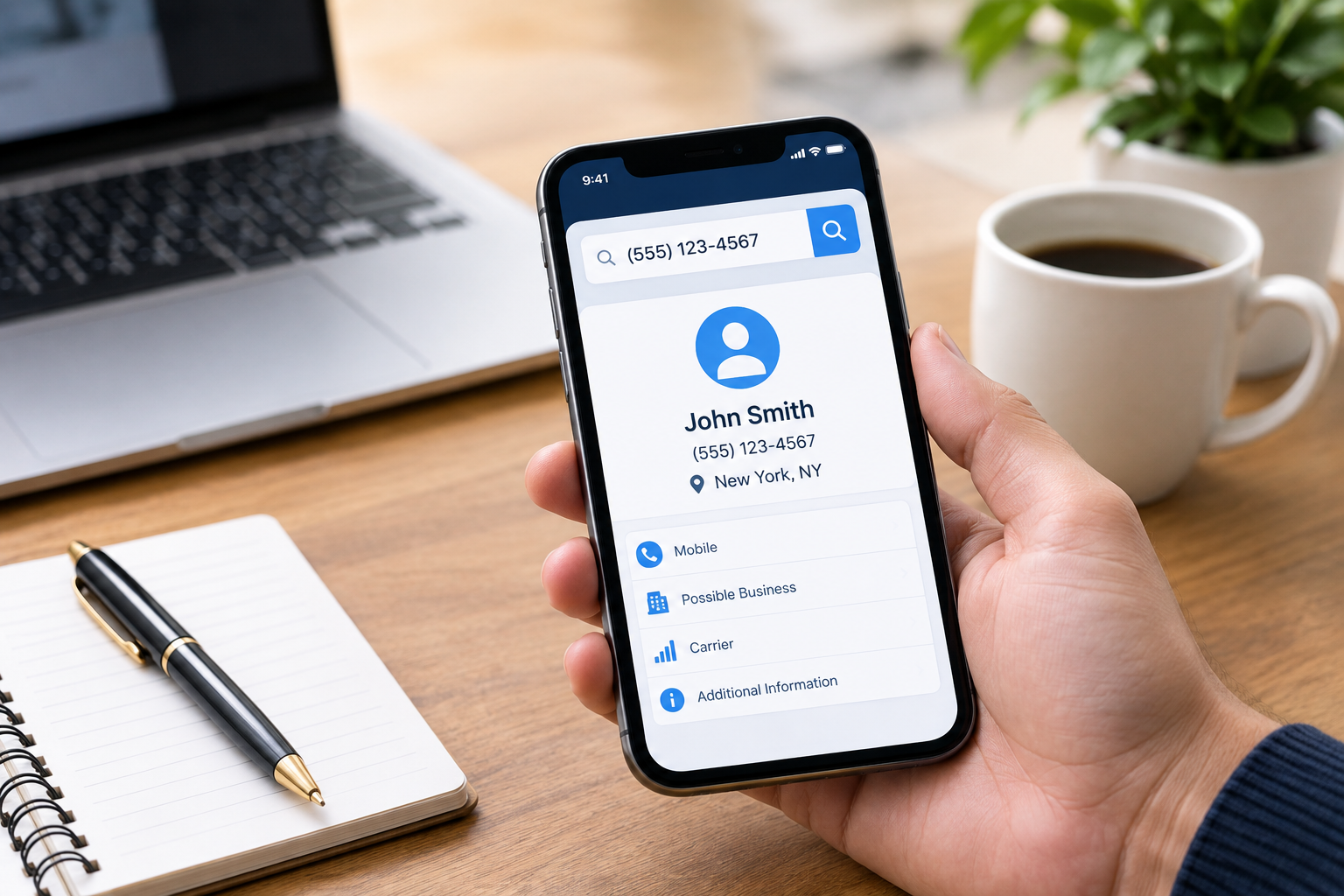
An unknown number flashes on the screen and the instinct is almost always the same: let it ring, then immediately type the number into a search bar to figure out who it was. That’s a reverse phone lookup in its simplest form, and it’s become such a normal habit that most smartphones now build a basic version of it directly into the caller ID system.
This guide covers how reverse phone lookup actually works, what it can and can’t reliably tell someone, and where its real limits and privacy considerations come in.
What Reverse Phone Lookup Actually Does
A reverse phone lookup takes a phone number as the starting point and searches for information associated with it, rather than the usual process of looking up a number from a name. Depending on the tool, that might return a caller’s name, general location, carrier, whether the number has been reported for spam, or nothing at all if the number isn’t in any available database.
Common, Legitimate Reasons People Use It
- Deciding whether to answer a call from an unfamiliar number.
- Checking whether a missed call or text came from a real business rather than a scam.
- Verifying a number listed on an online marketplace or rental posting before responding.
- Reconnecting with an old contact whose name is known but whose number changed.
- Confirming that a number claiming to be a bank, delivery service, or government agency is legitimate before sharing any information.
How Reverse Phone Lookup Tools Get Their Information
Most reverse lookup services pull from a mix of sources: public records, business directories, carrier data, and user submitted reports of spam or scam activity. None of these sources are complete or perfectly accurate on their own, which is why the same number can sometimes return different results across different tools.
Free vs. Paid Options
There’s a wide range of reverse lookup tools available, from the free spam labeling built into most phones to paid subscription services promising more detailed reports. Here’s a general comparison.
| Option | Cost | Typical Information Shown |
| Built in phone caller ID or spam labels | Free | Carrier name, spam likelihood, sometimes a name |
| Free reverse lookup apps | Free, ads or limited results | Carrier, line type, basic scam reports |
| Paid reverse lookup services | Monthly or per search fee | Name, general location, associated records |
| Business or professional lookup tools | Subscription, business use | Verified business identity information |
Paid services generally pull from more data sources and offer more detail, but that doesn’t guarantee accuracy, and it’s worth being cautious of any service that requires a subscription just to reveal partial results after promising a free search.
Why Caller ID and Lookup Results Aren’t Always Reliable
This is the part that trips a lot of people up. The Federal Trade Commission warns that scammers routinely fake caller ID information, a practice known as spoofing, making a call appear to come from a local number, a government agency, or even the recipient’s own phone number. Since a reverse lookup search is often just checking the same number displayed on caller ID, a spoofed number can return misleading or completely unrelated results. In short, a clean sounding name on a lookup result doesn’t guarantee the call is actually legitimate.
What to Do About Unwanted or Suspicious Calls
Beyond just identifying a number, there are concrete steps recommended by the Federal Communications Commission and FTC for dealing with unwanted or scam calls directly.
- Avoid answering calls from unfamiliar numbers when possible, and let them go to voicemail instead.
- Don’t press any number or respond to a prompt from an unsolicited robocall, since doing so can confirm the number is active to scammers.
- Register a phone number with the National Do Not Call Registry to reduce legitimate telemarketing calls.
- Report suspicious or scam calls directly to the FTC at reportfraud.ftc.gov or through the FCC’s consumer complaint center.
- Use a call blocking app or the carrier’s built in spam filtering tools to reduce repeat unwanted calls.
Privacy Considerations Worth Knowing
Reverse phone lookup runs in both directions. The same tools that help identify an unknown caller can also expose personal information tied to someone’s own number, especially if it’s ever been linked to public records, an old online account, or a data broker listing.
- Many data broker and people search sites allow individuals to submit a request to remove their own listed information, though the process varies by company.
- Reviewing what comes up when searching one’s own number occasionally can highlight what information is publicly accessible.
- Being cautious about where a phone number gets shared online, on forms, social media, or public listings, reduces how easily it ends up in these databases in the first place.
Legal Limits on How Lookup Data Can Be Used
It’s worth understanding that reverse phone lookup services intended for general consumer use are not the same as background check services regulated under the Fair Credit Reporting Act. Information from a general reverse lookup tool generally should not be used to make decisions about employment, housing, credit, or insurance. Services intended for those specific purposes are regulated differently and typically require proper authorization and a permissible purpose under federal law.
Tips for Getting More Reliable Results
- Cross check a number across more than one lookup tool rather than relying on a single result.
- Pay attention to whether a number has multiple independent spam reports rather than just one or two, which can be less reliable.
- Treat a lookup result as one data point, not confirmation, especially for anything involving sensitive information or money.
- When in doubt about a call claiming to be from a bank or government agency, hang up and call the organization back using a number from its official website, rather than trusting caller ID alone.
Final Thoughts
Reverse phone lookup can be a genuinely useful first step for figuring out who’s calling and deciding whether a number is worth engaging with. It’s just not foolproof, especially given how easily caller ID information can be faked. Treating a lookup result as a helpful clue rather than a guarantee, and knowing how to report a genuine scam call when one comes through, covers most of what’s actually useful about the practice.
Frequently Asked Questions
Is reverse phone lookup legal?
Yes, for general consumer purposes like identifying an unknown caller. Using lookup data for regulated decisions like employment or credit, however, falls under different legal requirements and generally requires a properly authorized background check service instead.
Why does a reverse phone lookup sometimes show no information at all?
Not every number appears in the public records, directories, or user reports that lookup services draw from, especially newer numbers, prepaid numbers, or numbers that haven’t been reported by other users.
Can a reverse phone lookup identify a scammer using a spoofed number?
Not reliably. Since scammers often fake the number shown on caller ID, a lookup on that number may return information about an unrelated, legitimate phone line rather than the actual caller.
How can someone remove their own number from reverse lookup websites?
Many data broker and people search sites offer an opt out or removal request process, though it varies by company and often needs to be repeated periodically as new listings appear.
Are free reverse phone lookup tools accurate?
They can provide a useful starting point, but free tools often pull from more limited data and may be less accurate or up to date than paid services, so cross checking results is a reasonable habit.
What should someone do if a reverse phone lookup confirms a number is a scam?
Avoid answering or responding to the number, and report it to the FTC at reportfraud.ftc.gov or through the FCC’s consumer complaint process so the report can be tracked alongside similar complaints.


