


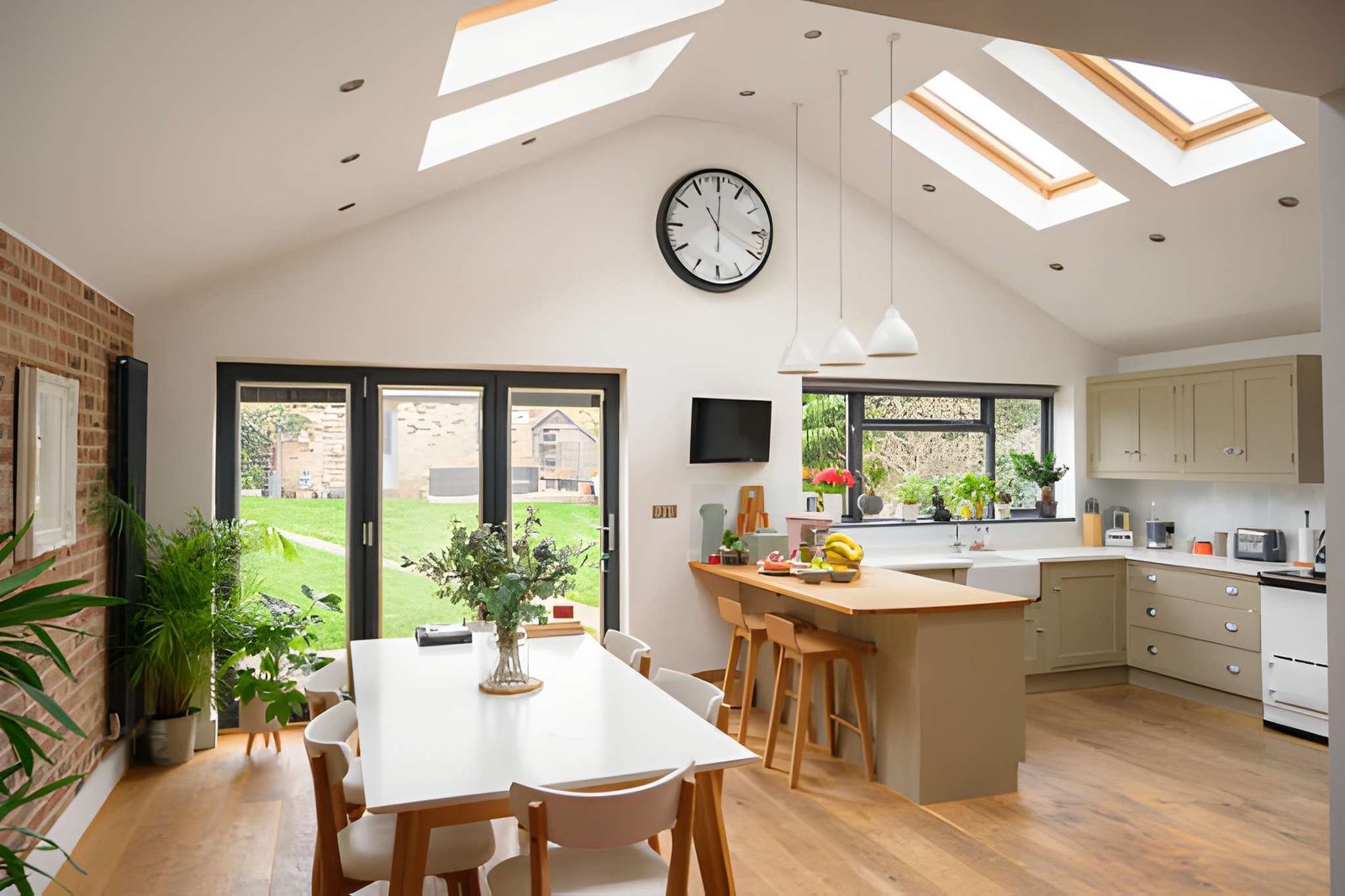
Someone stares up at a dark hallway ceiling and thinks, there has to be a way to get some sunlight in here without knocking down a wall. That’s usually the moment a skylight comes up. It’s one of those home features everyone recognizes on sight but can’t always explain, beyond “a window in the roof.” That description isn’t wrong, but it also leaves out the part that actually matters: how a skylight is built changes almost everything about how it performs.
The federal government even tracks skylight performance closely enough to set efficiency standards for them. The U.S. Department of Energy treats skylights as their own product category under ENERGY STAR, right alongside windows and doors, because a poorly chosen one can quietly wreck a home’s heating and cooling bill. This guide covers what a skylight actually is, the different types available, and what to think through before installing one.
What Is a Skylight
A skylight is a window installed into a roof rather than a wall. It lets natural light fall straight down into a room from above, which is a very different effect than light coming in sideways through a wall window. Some skylights open for airflow. Others stay sealed shut and exist purely to bring in light. Either way, the basic job is the same: pull daylight into a space that a regular window couldn’t reach.
How a Skylight Is Different From a Regular Window
A wall window and a roof skylight might use similar glass, but they’re built for completely different conditions. A skylight sits exposed to direct sun, rain, snow, and temperature swings all day, every day, in a way a vertical window never does. That’s why skylights need stronger seals, tougher glazing, and a flashing system to keep water out. Installing one wrong, or buying a cheap unit, is one of the more common ways a roof ends up with a leak nobody can trace.
Types of Skylights
Not all skylights work the same way, and picking the wrong type for a room is a common regret. Here’s a quick breakdown.
| Type | Best For | Watch Out For |
| Fixed skylight | Rooms that need light but not airflow, like hallways or high ceilings | No ventilation at all, so it won’t help with stuffy rooms |
| Vented skylight | Kitchens, bathrooms, and rooms that need fresh air and light | Costs more and needs a working seal to avoid leaks |
| Tubular skylight | Small spaces like closets, laundry rooms, or hallways with no roof access nearby | Not built for large rooms, since the tube limits how much light gets through |
| Custom or shaped skylight | Architectural features, atriums, or unusual roof angles | Higher cost and longer install time |
Fixed Skylights
These don’t open. They’re pure light, nothing else. A fixed skylight makes sense in a stairwell, hallway, or any spot where the goal is brightness, not airflow.
Vented Skylights
These open, either by hand crank, remote, or sometimes a small motor that reacts to rain. They’re the better pick for kitchens and bathrooms, where steam and odors need somewhere to go.
Tubular Skylights
Also called sun tunnels, these use a small reflective tube to funnel daylight from the roof down into a space, without needing a large opening or major structural work. They’re a popular fix for small, dark rooms like closets or laundry rooms.
Custom and Shaped Skylights
Pyramids, domes, barrel vaults, whatever an architect can dream up. These cost more and take longer to install, but they can turn a plain ceiling into a genuine design feature.
Why People Actually Install Skylights
More Natural Light, Without Losing a Wall
A skylight solves a problem regular windows can’t: getting daylight into the middle of a house, or into a room that doesn’t have an exterior wall to work with. That’s the whole appeal for interior rooms and top-floor spaces.
Lower Reliance on Artificial Light
A well-placed skylight can noticeably cut down how often the lights get flipped on during the day. It won’t replace a lighting bill entirely, but in a sunny room, the difference is real.
Ventilation, When It’s a Vented Model
Heat rises, so a vented skylight is often more effective at pulling stale, hot air out of a room than a standard window. That’s part of why they’re common in kitchens and bathrooms specifically.
A Different Kind of Views and Ambiance
Watching rain fall on a skylight, or catching stars from bed, isn’t something a wall window can offer. For a lot of homeowners, that alone is worth the investment.
What Skylights Cost and Why the Range Is So Wide
Skylight pricing swings a lot depending on type, size, glazing quality, and how complicated the roof structure is. A basic tubular skylight in an easy-to-reach spot is a fairly small project. A large, custom-shaped skylight on a steep or complicated roof, with electrical wiring for a motorized vent, is a completely different budget. Roofing material, roof pitch, and whether the attic space needs a light shaft all factor into the final number too.
Skylights and Energy Efficiency
This is the part people underestimate. A skylight is essentially a hole in the insulation layer of a house, so a poorly rated one can leak heat in winter and let in too much solar heat in summer. ENERGY STAR certifies skylights based on U-Factor, which measures how much heat escapes, and Solar Heat Gain Coefficient, which measures how much solar heat gets through the glass. The right numbers depend on climate zone, since a skylight built for a cold northern state isn’t necessarily right for a hot southern one.
A few practical takeaways on efficiency:
- Double or triple-pane glazing performs far better than single-pane in almost every climate.
- Low-E coatings help block unwanted heat without cutting down on visible light.
- Placement matters. A south-facing skylight in a hot climate can turn a room into a greenhouse without the right glass.
- Some ENERGY STAR certified skylights qualify for a federal tax credit, which is worth checking before buying.
Skylight Placement and Sizing
A skylight that’s too big for the room can make it uncomfortably bright and hot. Too small, and it barely makes a difference. As a rough starting point, many installers aim for a skylight that covers somewhere around 5 to 15 percent of the floor area of the room, adjusted based on how much wall window light the room already gets. North-facing skylights tend to give soft, even light with less heat gain, while south-facing ones bring in more light and more heat.
Common Problems and How to Avoid Them
- Leaks: usually caused by poor flashing or an aging seal, not the glass itself.
- Condensation: happens when warm indoor air meets a cold skylight surface, often a sign of poor insulation around the frame.
- Too much heat: often the result of the wrong glazing for a sunny climate, or a skylight placed on a strong south-facing slope.
- Fading furniture or flooring: UV exposure from an uncoated skylight can bleach fabric and wood over time.
Tip: Most leaks people blame on the skylight itself actually trace back to the flashing around it. A properly flashed, well-installed unit rarely leaks on its own.
Installing a Skylight: What the Process Looks Like
- An installer checks the roof structure and rafters to confirm the spot can support an opening.
- A section of the roof and ceiling is cut to size, and a shaft is framed if the roof and ceiling aren’t flush.
- The skylight unit is set into place and sealed with flashing to keep water out.
- Interior finishing work closes up the light shaft and ceiling opening.
- For vented models, wiring or manual controls get installed and tested.
This is not usually a do-it-yourself weekend project. Cutting into a roof structure incorrectly can cause leaks or structural issues that are far more expensive to fix later than the skylight itself.
Skylight vs. Solar Tube: What’s the Real Difference
People sometimes use these terms interchangeably, but they’re not quite the same thing. A traditional skylight is a full window unit set into the roof, usually with some kind of shaft connecting it to the ceiling below. A solar tube, or tubular skylight, uses a much smaller roof opening and a reflective tube to carry light down, which makes it cheaper and easier to install, but less dramatic in terms of view and light volume.
Final Thoughts
A skylight is a simple concept, a window built into the roof, but the details underneath that simple idea are what actually decide whether it’s a good investment or a future leak. Type, glazing, placement, and climate all play a role. Anyone considering one should think about the room’s actual needs first, brightness, airflow, or both, before falling in love with a specific style.
Frequently Asked Questions
What exactly is a skylight?
A skylight is a window installed in a roof instead of a wall, designed to bring natural light, and sometimes ventilation, into a room from above.
Are skylights worth the cost?
For rooms that lack natural light or need extra ventilation, many homeowners find them worth it. The value depends heavily on the type chosen, the climate, and how well it’s installed.
Do skylights leak?
They can, but most leaks trace back to poor flashing or an aging seal rather than a flaw in the glass itself. A properly installed, well-maintained skylight should not leak.
What is the difference between a skylight and a solar tube?
A traditional skylight is a full window unit, often with a light shaft connecting it to the ceiling. A solar tube uses a smaller opening and a reflective tube to bring in light, which is cheaper but offers less light volume and no real view.
Can a skylight make a room too hot?
Yes, especially south-facing skylights in sunny climates with the wrong glazing. Choosing the right Solar Heat Gain Coefficient rating for the climate zone helps prevent this.
Do skylights need to be cleaned differently than regular windows?
They’re harder to reach and often need cleaning from the roof side, so many homeowners hire a professional rather than attempt it themselves.
Can any roof support a skylight?
Most can, but roof structure, pitch, and materials all affect the installation. A qualified installer needs to check the specific roof before confirming placement.


