
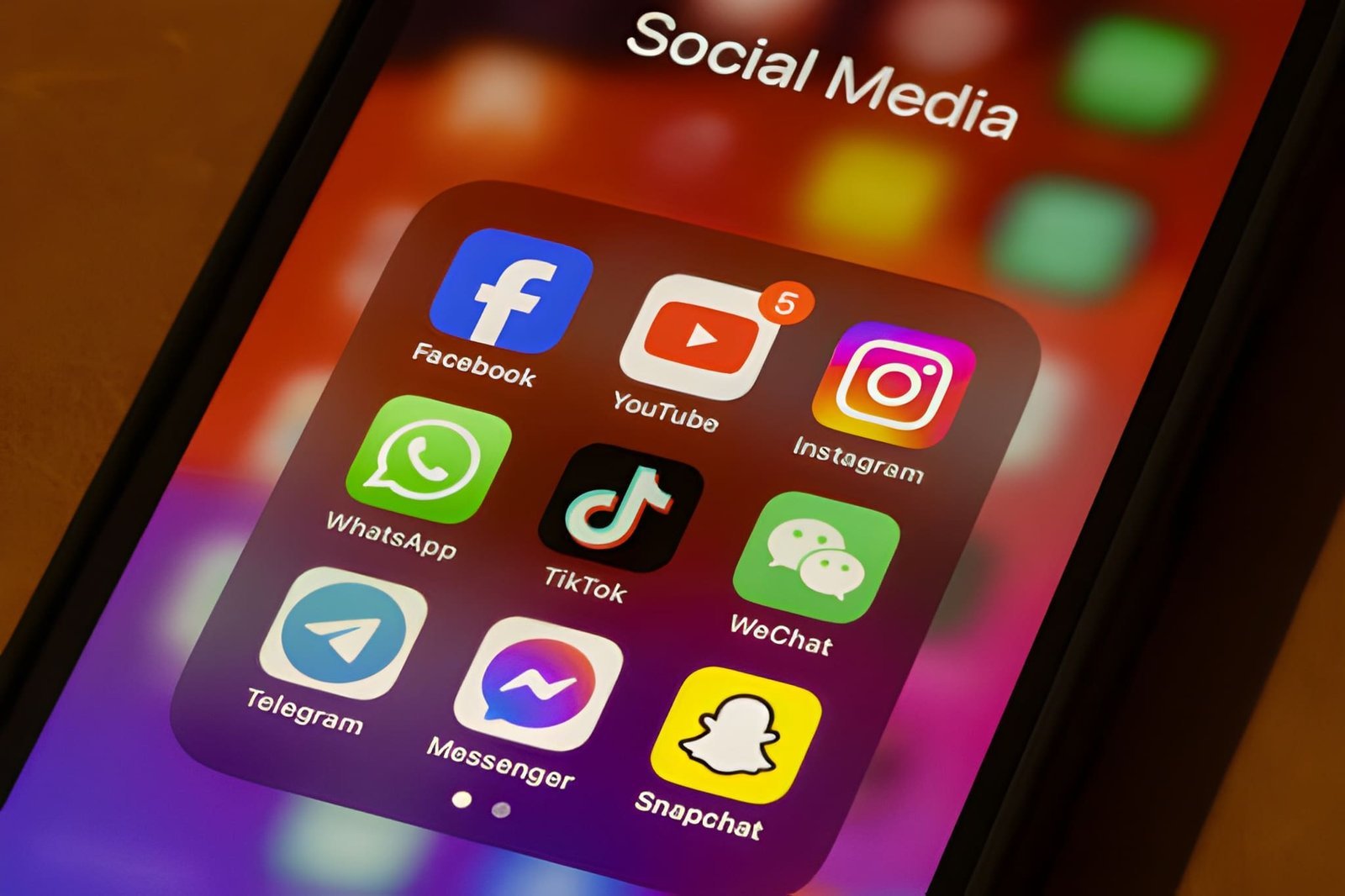
When social media first arrived, it felt genuinely exciting. Here was a tool that could connect strangers across continents, give ordinary people a public voice, and turn isolated communities into global ones. That potential was real. But somewhere along the way, the cost of all that connection started quietly stacking up — and now, years later, we have enough evidence to have an honest conversation about what these platforms have actually done to us.
This is not a piece about hating technology. It is about looking at the documented record clearly.
The Mental Health Numbers Are Hard to Dismiss
A Shift in How Teenagers See These Platforms
The clearest damage shows up in mental health data, especially among teenagers. A 2025 Pew Research survey found that 48 percent of American teens now believe social media has a mostly negative effect on people their age. Back in 2022, that figure sat at 32 percent. That is a 16-point jump in just three years — and it tracks with what clinicians, parents, and teachers have been reporting for a while.
Heavy Use and the Risk of Serious Mental Health Issues
Young people spending more than three hours daily on social platforms face roughly twice the risk of depression and anxiety compared to lighter users. Push that to five or more hours, and the risk of suicidal ideation rises in a statistically meaningful way. Girls tend to report the harshest effects — damaged confidence, disrupted sleep, a constant background sense of being measured and falling short.
“These are not edge cases. They describe a generation sitting in classrooms, struggling with feelings they often cannot name.”
The Companies Knew More Than They Admitted
Project Mercury: Meta’s Internal Findings
What makes this harder to stomach is the evidence that platform companies were not blindsided by any of this. In 2020, Meta conducted an internal study — called Project Mercury, run alongside Nielsen — where randomly selected users were asked to step away from Facebook for a week. The results, according to Meta’s own internal notes, showed lower levels of depression, anxiety, loneliness, and social comparison among the people who took the break.
The Tobacco Parallel
One Meta researcher flagged the study as evidence of a causal link to social comparison. Another employee reportedly warned that burying those findings would put the company in the same historical position as tobacco manufacturers — who knew cigarettes caused cancer and said nothing publicly for decades.
That comparison was not made by critics on the outside. It came from inside the building.
Misinformation Is Not a Bug — It Is a Revenue Model
Why False Stories Travel Faster Than True Ones
False information does not spread on social media by accident. It spreads because the algorithms that run these platforms are designed to maximize the time you spend on them — and emotionally provocative content, which false stories tend to be, keeps people scrolling longer than careful, accurate reporting does.
Real-World Consequences
During the COVID-19 pandemic, health misinformation circulated so rapidly on social platforms that it measurably undermined vaccination efforts. In political contexts, coordinated disinformation campaigns have interfered with elections in multiple countries. For ordinary users, the line between genuine public opinion and manufactured consensus has become genuinely difficult to detect.
The problem is structural. It will not fix itself.
Your Privacy Left Quietly, Without Asking
What Is Actually Being Collected
Most people believe they are in reasonable control of what they share online. They are not. Every action taken on a social platform — a reaction, a search, a location tag, a pause on a video — feeds into a profile that grows continuously, often shared with advertising networks, third-party applications, and in some documented cases, government agencies.
When the Abstract Becomes Personal
Investigations and legal proceedings have confirmed that major platforms shared user data with third parties in ways that violated their own stated privacy policies. The harm can feel abstract until it becomes personal — an ad that seems to know something you never told anyone, a data breach, the slow realisation that intimate details of your life have been turned into a commodity.
Cyberbullying Does Not End When School Does
Scale and Persistence
Traditional bullying was bounded by time and space. Social media removed both of those limits. Research from the Cyberbullying Research Center puts the figure at around 37 percent of young people aged 12 to 17 having experienced cyberbullying. What makes it particularly damaging is the permanence — screenshots travel, posts get reshared, and the humiliation can follow a person indefinitely.
Adults Are Not Protected Either
Pile-ons, targeted harassment, and coordinated attacks against individuals have become familiar features of social media culture. Anonymity lowers the cost of cruelty, and platforms have been slow to raise it.
Some People Are Starting to Step Away
It would be misleading to end without noting that something is shifting. Deloitte’s 2025 consumer survey found that nearly a quarter of all users had deleted at least one social media app in the previous year. Among Gen Z respondents, that figure was closer to one in three.
There is something genuinely ironic about the fact that videos of people going offline, switching to basic phones, and reclaiming analog hobbies have themselves gone viral. But the underlying impulse is worth taking seriously. People are starting to recognise that the platforms are not neutral — and that stepping back, even partially, tends to feel better.
The Real Problem Is the Business Model
The harm documented here does not come from social connection itself. It comes from a specific design philosophy: build for maximum engagement, monetise attention, and treat user wellbeing as a secondary concern at best.
That model has produced measurable damage to mental health, contributed to the erosion of shared reality, dismantled meaningful privacy, and given bullying new reach and permanence. The platforms that profit from these outcomes bear responsibility for them.